
Building a Strong Engineering Career: From College to Professional Success
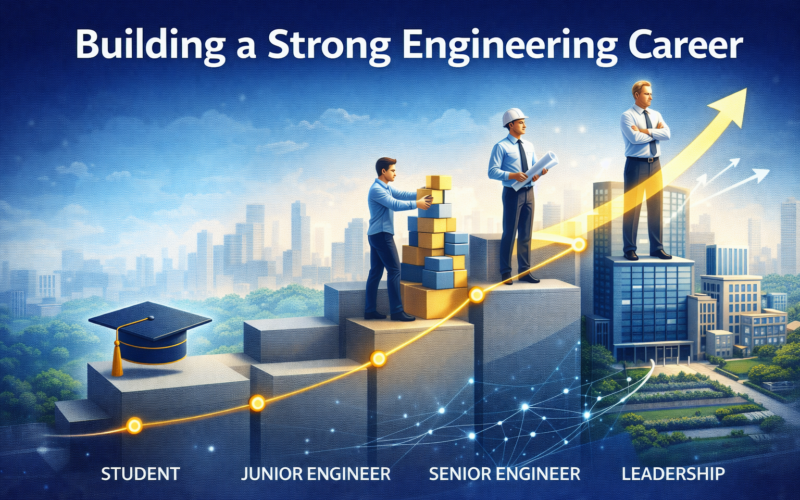
Launching and Developing Your Engineering Career
Author: Geetha Editorial Team
Published: Nov 11, 2025
Last Updated: Feb 13, 2026
Graduation marks the beginning of your professional engineering career, not its end. The transition from college to industry is significant. This guide covers navigating the early career years, developing professional competencies, making career choices, and building long-term success in engineering.
Transitioning from College to Industry
First Job Selection: Your first job significantly influences your career trajectory. Consider factors beyond salary: company culture, mentorship opportunities, technical challenges, growth prospects, and learning opportunities. A job offering steep learning curve at a good company might be better than a comfortable, routine position elsewhere.
Expectations Setting: First jobs are often entry-level with significant learning and grunt work. Expect to handle routine tasks while learning company processes and systems. This is normal and valuable—you’re being paid to learn industry practices.
Onboarding: Use your onboarding period effectively. Understand company structure, build relationships with colleagues, clarify expectations, and identify mentors. Good onboarding sets tone for your tenure.
Building Technical Expertise
Deep Technical Knowledge: In your first years, focus on building deep expertise in your domain. Master tools, processes, and technologies relevant to your role. Become the person colleagues turn to for technical questions in your area.
Continuous Learning: Technology evolves rapidly. Dedicate time to continuous learning—online courses, reading papers, attending conferences. Many companies support professional development through tuition reimbursement or learning budgets.
Certifications: Some fields value professional certifications. Project Management (PMP), Security (CISSP, CEH), Cloud (AWS, GCP, Azure), or domain-specific certifications enhance credentials and career prospects. Balance certifications with broader skill development.
Soft Skills Development
Communication: Technical skills matter, but communication skills determine career growth. Improve written communication (emails, documentation, reports), verbal communication (presentations, meetings), and listening skills. These skills differentiate good engineers from great ones.
Leadership: Even in individual contributor roles, develop leadership. Take ownership of projects, mentor junior engineers, and influence others. Leadership skills become increasingly important for advancement.
Problem-Solving: Develop systematic approaches to complex problems. Break problems into components, identify root causes, propose solutions, and communicate trade-offs. Strong problem-solving is universally valued.
Emotional Intelligence: Understanding and managing emotions (yours and others’) is crucial for success. Develop self-awareness, empathy, and interpersonal skills. These enable effective collaboration and leadership.
Career Progression Paths
Engineering careers follow different paths:
Individual Contributor Track: Deepen technical expertise, become a subject matter expert, influence through knowledge rather than position. Many organizations value this path, offering senior technical roles (staff engineer, principal engineer) with high compensation.
Management Track: Progress to supervising teams, managing projects, and leading organizations. Requires developing people management and strategic thinking skills.
Entrepreneurship: Some engineers start companies, developing products or services. This path offers unlimited upside but requires taking risks and developing diverse skills beyond engineering.
Most successful careers combine elements. Some balance individual contribution with team leadership. Others transition between technical and management roles.
Performance Management and Growth
Setting Goals: Work with managers setting clear, achievable goals. Goals should be specific, measurable, and aligned with company objectives. Track progress regularly and adjust as needed.
Regular Feedback: Don’t wait for annual reviews for feedback. Request regular check-ins with managers. Understand expectations, performance gaps, and growth areas. Act on feedback promptly.
Recognition and Visibility: Ensure your contributions are recognized. Communicate accomplishments (without bragging), volunteer for high-visibility projects, and contribute to company meetings and discussions. Good performance means little if no one knows about it.
Networking and Professional Community
Industry Connections: Build network across companies. Attend industry conferences, join professional societies, participate in online communities. Networking provides opportunities, knowledge sharing, and career support.
Mentorship: Find mentors early in career. Mentors provide guidance, perspective, and connections. As you progress, mentor others. Mentoring develops your leadership and expands your network.
Conferences and Speaking: Speaking at industry conferences builds your professional brand. Present your work, share knowledge, and connect with peers. This visibility helps career progression.
Specialization vs. Generalization
Deep Specialization: Becoming expert in specific domain (e.g., cloud infrastructure, embedded systems, web frameworks) makes you valuable for specialized roles. Specialization enables premium compensation but can limit career flexibility.
Broad Generalization: Developing diverse skills across domains increases adaptability. Generalists can transition between roles more easily and often progress to leadership faster. However, generalists may not achieve same technical depth or compensation as specialists.
Most successful careers blend both—deep expertise in core domain combined with breadth in adjacent areas.
Job Changes and Career Development
When to Change Jobs: Change jobs when you’re no longer learning, growth is stalled, or you find misalignment with company values. Typically, staying 2-3 years in a role allows meaningful learning while enabling regular career progression through job changes.
Making Strategic Moves: Each job change should advance your career. Moves might provide technical growth (learning new technologies), role growth (moving to leadership), company growth (joining more prestigious companies), or compensation growth.
Negotiation: Salary negotiation is critical. Research market rates, understand your value, and negotiate confidently. Many people leave money on the table by accepting first offers without negotiation.
Work-Life Balance
Sustainability: Long careers require sustainable practices. Burnout leads to poor decisions and health issues. Maintain reasonable working hours, take vacations, exercise, and maintain personal relationships. Sustainable practices paradoxically improve long-term productivity.
Defining Success: Align career with personal values. For some, success is financial; for others, it’s impact or flexibility. Recognize what matters to you and make career choices accordingly.
Continuous Evolution
Adapting to Change: Technology evolves. Career growth requires adapting to these changes. Engineer who learned only one technology will struggle as it becomes obsolete. Continuous learning and evolution are non-negotiable.
Later Career: As you progress, opportunities expand—consulting, education, executive roles, board positions, or investments. Many senior engineers leverage expertise in multiple ways beyond traditional employment.
Key Takeaways
- Transition from college to industry requires both technical and soft skills—communication and adaptability are as important as engineering knowledge.
- Find mentors early—experienced guides significantly accelerate learning and career development.
- Build technical expertise continuously—stay updated with industry trends, learn new technologies, and master your domain.
- Multiple career paths are available—individual contributor (IC), management, entrepreneurship, or hybrid roles.
- Negotiation is important—understand market rates, negotiate offers, and advocate for fair compensation and growth opportunities.
- Invest in work-life balance—long-term success requires sustainable work practices and personal well-being.
- Strategic career moves every 2-3 years can accelerate growth—evaluate opportunities, take calculated risks, and don’t stay stagnant.

Leave a Reply